
Watch This Farm Transform with Solar Pump

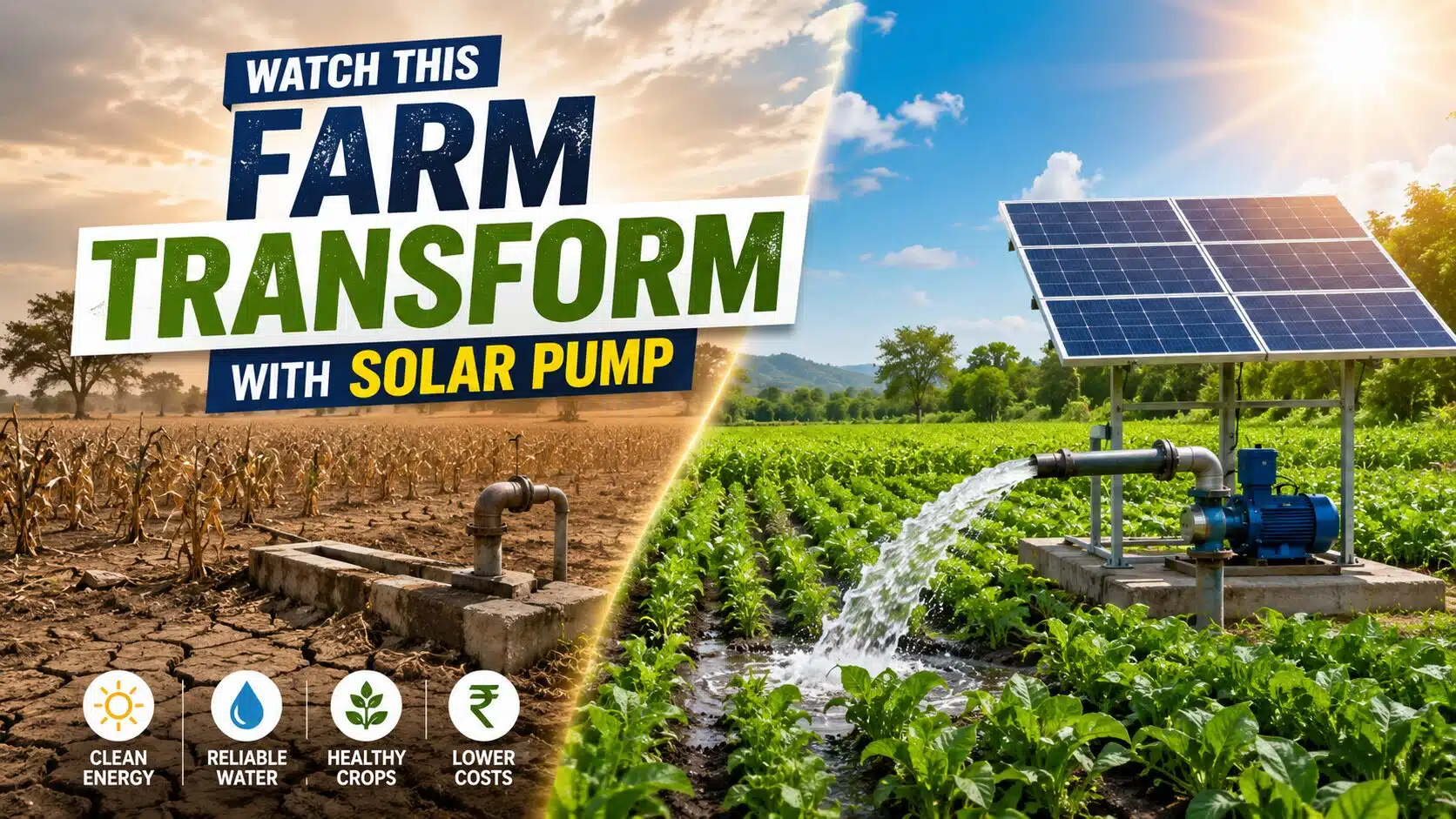
From Dry Fields to Green Growth — The Power of Solar Pumping
Farming depends on one simple thing more than anything else: water. Without reliable water, even the best land, seeds, fertilizers, and machinery cannot produce good results. For many farmers, the biggest challenge is not the lack of land — it is the lack of affordable, consistent, and timely irrigation.
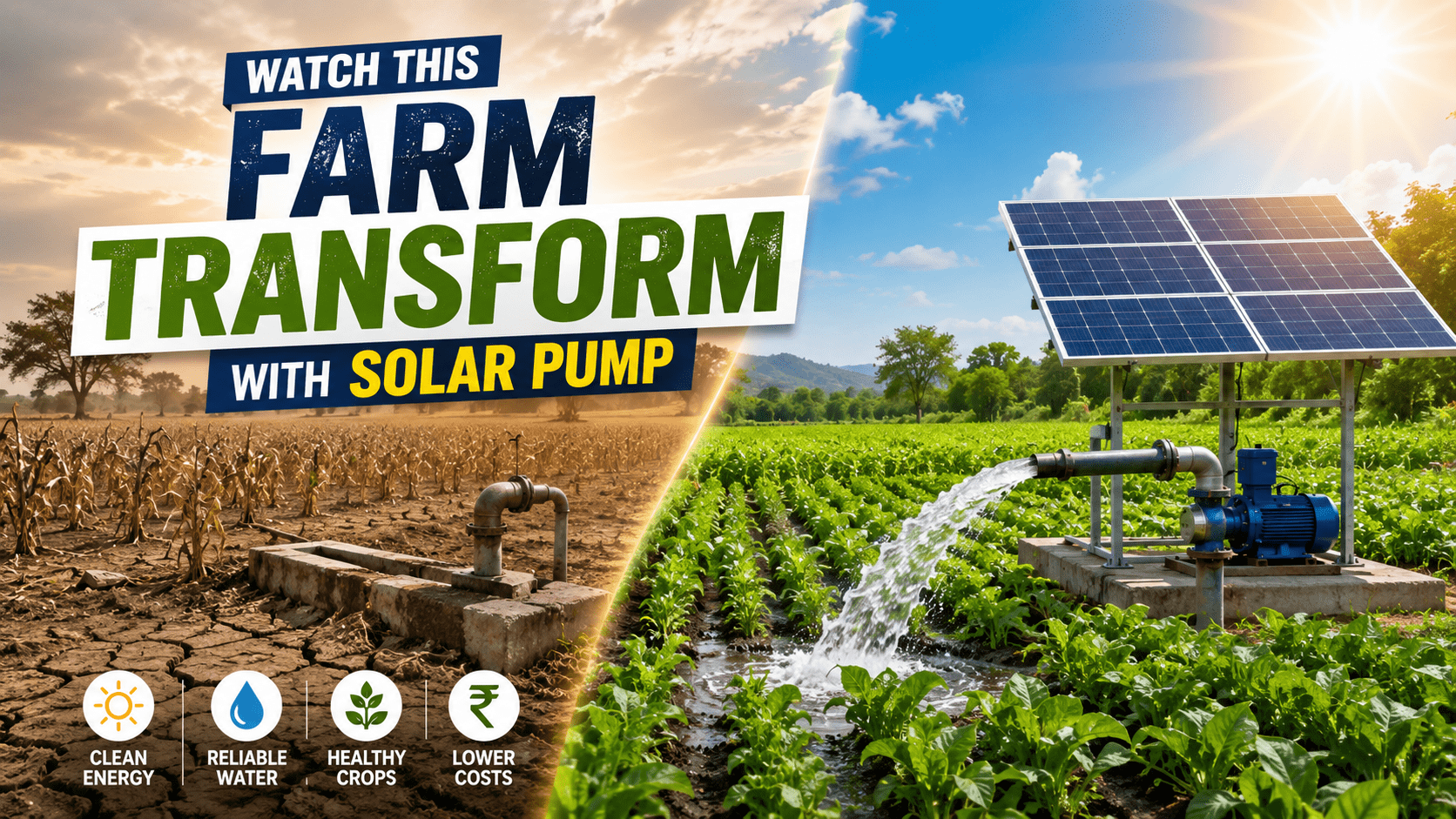
This is where the solar water pump changes the entire story.
Imagine a farm where the diesel engine used to roar every morning, fuel expenses kept increasing, and irrigation depended on electricity load-shedding or expensive fuel. Now imagine the same farm running silently under sunlight, pumping water directly from the bore, canal, pond, or well — without monthly electricity bills and without diesel cost.
That is the real transformation.
A solar pump is not just a machine. It is a long-term farming upgrade. It gives farmers better control over irrigation, reduces operating costs, improves crop health, and increases the value of the farm.
What Is a Solar Pump?
A solar pump is a water pumping system powered by sunlight. Instead of using diesel, petrol, or grid electricity, it uses solar panels to generate energy. That energy runs a pump, which lifts water from underground or surface sources and supplies it to fields, tanks, drip irrigation systems, or livestock areas.
A complete solar pump system usually includes:
- Solar panels
- Solar pump inverter or controller
- Submersible or surface pump
- Motor
- Mounting structure
- Cables and protection devices
- Pipes and fittings
- Bore, well, pond, canal, or water source
- Optional water storage tank
The basic idea is simple:
Sunlight → Solar Panels → Controller/Inverter → Pump → Water for Farm
How a Solar Pump Transforms a Farm
A farm before solar pumping usually faces many issues:
- High diesel expenses
- Unreliable electricity
- Delayed irrigation
- Low water pressure
- Crop stress due to irregular watering
- Maintenance problems with engines
- Noise and smoke pollution
- Dependence on fuel availability
After solar pump installation, the farm starts moving differently. The farmer can pump water during the daytime using free sunlight. Irrigation becomes more predictable, and the running cost drops sharply.
The transformation can be seen in many ways:
- Fields receive water on time
- Crops grow healthier
- Diesel cost reduces or disappears
- Irrigation becomes easier to manage
- Farm productivity improves
- Water storage becomes more practical
- The farm becomes more modern and valuable
- Long-term profit margins improve
For farmers, this is not only a technical upgrade. It is a business decision.
Why Solar Pumps Are Becoming Popular in Farming
Solar pumps are becoming popular because farmers are tired of expensive and unreliable irrigation methods. Diesel prices change again and again. Electricity supply is not always stable in rural areas. Tube well operating costs are increasing. At the same time, solar technology has become more practical and available.
A properly designed solar pump system can work for many years with low running cost. That is why farmers are moving toward solar-based irrigation.
Main reasons farmers choose solar pumps:
- No fuel required
- Lower operating cost
- Reliable daytime pumping
- Suitable for remote farms
- Less maintenance compared to diesel engines
- Environment-friendly operation
- Long-term return on investment
- Better control over irrigation schedule
The biggest attraction is simple: once the system is installed, the sun becomes the main power source.
Step-by-Step Farm Transformation with Solar Pump
Step 1: Farm Water Requirement Analysis
Before installing a solar pump, the first step is to understand the farm’s water needs. Every farm is different. A wheat field, cotton field, vegetable farm, orchard, and livestock farm all require different water quantities.
Important points include:
- Total farm area
- Crop type
- Daily water requirement
- Irrigation method
- Water source depth
- Required water pressure
- Pipe distance
- Seasonal water demand
A good solar pump system should never be selected only by guessing horsepower. It should be designed according to actual water demand and site conditions.
Step 2: Checking Bore Depth and Water Level
For a tube well or bore system, water depth is extremely important. The deeper the water, the more power the pump needs. A shallow water source may need a smaller pump, while a deep bore may require a more powerful submersible pump.
Key factors include:
- Total bore depth
- Static water level
- Dynamic water level
- Bore diameter
- Water discharge capacity
- Sand or mud condition
- Existing pipe size
Choosing the wrong pump can lead to low discharge, motor overload, or system failure. This is why professional site inspection matters.
Step 3: Selecting the Right Pump
Solar pumps are available in different types. The correct pump depends on the water source and farm requirement.
Common solar pump types:
- Submersible solar pump
Best for boreholes, deep wells, and underground water. - Surface solar pump
Best for ponds, canals, tanks, or shallow water sources. - AC solar pump
Commonly used for larger systems and higher-power applications. - DC solar pump
Efficient for small to medium water pumping systems.
The pump should be selected based on head, discharge, water source, and daily operating hours.
Step 4: Solar Panel Sizing
Solar panels are the heart of the system. If panels are under-sized, the pump will not perform properly. If they are over-sized without proper planning, the cost may increase unnecessarily.
Panel sizing depends on:
- Pump horsepower
- Motor voltage
- Daily working hours
- Sunlight availability
- Pump efficiency
- Inverter/controller requirement
- Future expansion plan
A properly sized solar array ensures smooth operation during peak sunlight hours.
Step 5: Installation and Structure
Solar panels must be installed at a suitable angle and direction to receive maximum sunlight. The structure should be strong enough to handle wind, rain, and outdoor conditions.
Good installation includes:
- Strong mounting frame
- Correct panel angle
- Proper cable size
- Earthing and protection
- Safe inverter/controller placement
- Proper pipe connection
- Testing of water discharge
- Clean and secure wiring
A neat installation improves safety, performance, and system life.
Step 6: Farm Irrigation Begins
Once the system starts, the farm transformation becomes visible. Water begins flowing without diesel noise and without waiting for grid electricity. The farmer can irrigate during the day and plan watering according to crop needs.
The result is a cleaner, quieter, and more controlled irrigation process.
Solar Pump vs Diesel Pump vs Electric Pump
| Feature | Solar Pump | Diesel Pump | Grid Electric Pump |
|---|---|---|---|
| Running Cost | Very low | Very high | Medium to high |
| Fuel Requirement | No fuel | Diesel required daily | No fuel, but electricity required |
| Monthly Bill | No major monthly bill | Fuel expense continues | Electricity bill continues |
| Maintenance | Low | High | Medium |
| Noise | Silent | Very noisy | Low noise |
| Pollution | Clean energy | Smoke and emissions | Depends on power source |
| Best For | Long-term farming | Temporary use | Areas with stable electricity |
| Remote Area Use | Excellent | Possible but costly | Difficult if no grid |
| Daytime Operation | Very good | Good if fuel available | Depends on electricity |
| Long-Term Savings | High | Low | Medium |
Pros of Solar Pump
Solar pumps offer many advantages, especially for farmers who want to reduce long-term irrigation costs.
Major benefits include:
- Free energy from sunlight
After installation, the system uses solar power, reducing dependence on diesel or grid electricity. - Low running cost
The farmer does not need to buy fuel every day. - Reliable irrigation during sunlight hours
Solar pumps work best when sunlight is available, which matches many daytime farming activities. - Suitable for remote farms
Farms without electricity connection can still get water through solar power. - Less maintenance
Compared to diesel engines, solar systems have fewer moving parts and less frequent service needs. - Environment-friendly
Solar pumps do not create smoke, fuel smell, or engine noise. - Long-term investment
The upfront cost can be recovered over time through fuel and electricity savings. - Better farm planning
Farmers can schedule irrigation more confidently during the day. - Improves farm value
A farm with a solar pumping system becomes more modern and attractive.
Cons of Solar Pump
Solar pumps are powerful, but they must be understood properly. They are not magic. Their performance depends on correct design and installation.
Possible disadvantages include:
- Higher initial cost
Solar pump systems can require a bigger upfront investment compared to small diesel engines. - Depends on sunlight
Performance reduces during cloudy weather, rain, fog, or low sunlight conditions. - Daytime-focused operation
Without batteries or water storage, solar pumps mainly work during sunlight hours. - Requires proper sizing
Wrong pump selection or poor panel sizing can reduce performance. - Needs open space for panels
The system requires shade-free land or structure space. - Quality matters a lot
Low-quality panels, inverters, pumps, or cables can create long-term problems. - Installation must be professional
Poor wiring, weak structure, or incorrect pump matching can damage the system.
The good news is that most of these problems can be avoided with proper planning.
Before and After: Farm Transformation
| Area | Before Solar Pump | After Solar Pump |
|---|---|---|
| Irrigation Cost | High due to diesel or bills | Very low daily cost |
| Water Availability | Uncertain | More controlled |
| Farm Noise | Loud engine sound | Silent operation |
| Crop Health | Stress due to delayed water | Better watering schedule |
| Maintenance | Frequent engine service | Lower maintenance |
| Farmer Control | Dependent on fuel/electricity | More independent |
| Profit Margin | Reduced by operating cost | Improved savings |
| Farm Image | Traditional setup | Modern solar-powered farm |
Best Uses of Solar Pumps on Farms
Solar pumps can be used in many agricultural applications.
Common farm uses include:
- Tube well irrigation
- Bore water pumping
- Drip irrigation
- Sprinkler irrigation
- Orchard watering
- Vegetable farm irrigation
- Livestock water supply
- Filling water tanks
- Canal or pond water lifting
- Greenhouse irrigation
For modern farming, solar pumps can also be combined with water-saving irrigation methods such as drip and sprinkler systems.
Eye-Catching Farm Transformation Example
Imagine a farmer with 20 acres of land. Previously, he used a diesel engine to run the water pump. Every irrigation cycle required fuel, engine oil, labor, and maintenance. Sometimes the diesel engine failed. Sometimes fuel was not available on time. Sometimes irrigation was delayed, and crops suffered.
After installing a solar pump system, the farm changed completely.
Now, when the sun rises, the solar panels start producing energy. The pump begins lifting water. The farmer can irrigate during the day without worrying about diesel cost. The system runs quietly, and water flows steadily through the pipeline.
The fields begin to look healthier. The farmer saves money every month. The farm becomes more organized. The irrigation system becomes easier to manage. The sunlight that was once only heat is now converted into productive energy.
That is the real beauty of solar pumping:
The same sun that shines on the field now waters the field.
Important Things to Check Before Buying a Solar Pump
Before investing in a solar pump, farmers should check these points carefully:
- What is the bore depth?
- What is the water level?
- How much water is needed daily?
- What crop is being irrigated?
- Is the pump for bore, canal, pond, or tank?
- How far does water need to travel?
- What pipe size is required?
- Is the system AC or DC?
- What is the quality of panels and inverter?
- Is there after-sales support?
- Is installation included?
- Is future expansion possible?
A solar pump should be designed as a full system, not purchased as separate random parts.
Common Mistakes Farmers Should Avoid
Many solar pump problems happen because of poor planning. Avoid these mistakes:
- Buying a pump only by horsepower
- Ignoring bore depth and water level
- Using low-quality cables
- Installing panels in shaded areas
- Choosing an undersized solar system
- Using weak mounting structures
- Not checking warranty and service support
- Ignoring pipe friction loss
- Installing without proper protection devices
- Expecting the same output in cloudy weather as peak sunlight
A good solar pumping system is not only about buying equipment. It is about correct design, quality installation, and reliable support.
Solar Pump Cost vs Long-Term Saving
The initial cost of a solar pump may feel high, but the long-term saving is the main reason farmers choose it.
With diesel pumps, the farmer continues paying for:
- Diesel
- Engine oil
- Filters
- Maintenance
- Repairs
- Transport of fuel
- Labor
- Engine replacement
With solar pumps, the biggest cost is usually at the start. After that, the daily running cost becomes much lower.
This makes solar pumps especially attractive for farmers who irrigate regularly. The more the system is used, the more savings it can create over time.
Is Solar Pump Suitable for Every Farm?
Solar pumps are suitable for many farms, but the system must match the farm’s actual requirement. A small vegetable farm does not need the same system as a large agricultural field. A shallow water source does not need the same pump as a deep bore.
Solar pump is a strong option if:
- The farm receives good sunlight
- The farmer wants to reduce diesel cost
- The water source is suitable
- The irrigation is mostly done during daytime
- There is enough space for panels
- The system is professionally designed
- Long-term savings are important
For night irrigation, farmers may need a water storage tank, hybrid system, or battery-based solution depending on the requirement.
Final Verdict: Solar Pump Can Truly Transform a Farm
A solar pump is one of the most practical upgrades for modern agriculture. It reduces operating cost, gives better irrigation control, and helps farmers become less dependent on diesel and unstable electricity.
The transformation is not only visible in the equipment — it is visible in the field.
The farm becomes greener. The irrigation becomes smoother. The farmer becomes more confident. The monthly expenses reduce. The crops receive water on time. The entire farming operation becomes more efficient.
For farmers who want long-term growth, solar pumping is not just an option. It is a smart investment.
In simple words:
- Diesel pump runs on fuel.
- Electric pump runs on grid power.
- Solar pump runs on sunlight.
- A smart farm runs on planning.
When planned correctly, a solar pump can turn a struggling farm into a more productive, profitable, and future-ready agricultural system.