
Day in the Life of a Bore Drilling Team


Behind Every Water Bore, There Is a Team Fighting Dust, Depth, Pressure, and Time
A bore drilling team’s day does not start when the drilling machine begins rotating. It starts much earlier — with planning, checking equipment, preparing tools, understanding the land, and making sure every team member knows their role. For many people, bore drilling looks like a simple process: a machine comes, makes a hole in the ground, and water comes out.
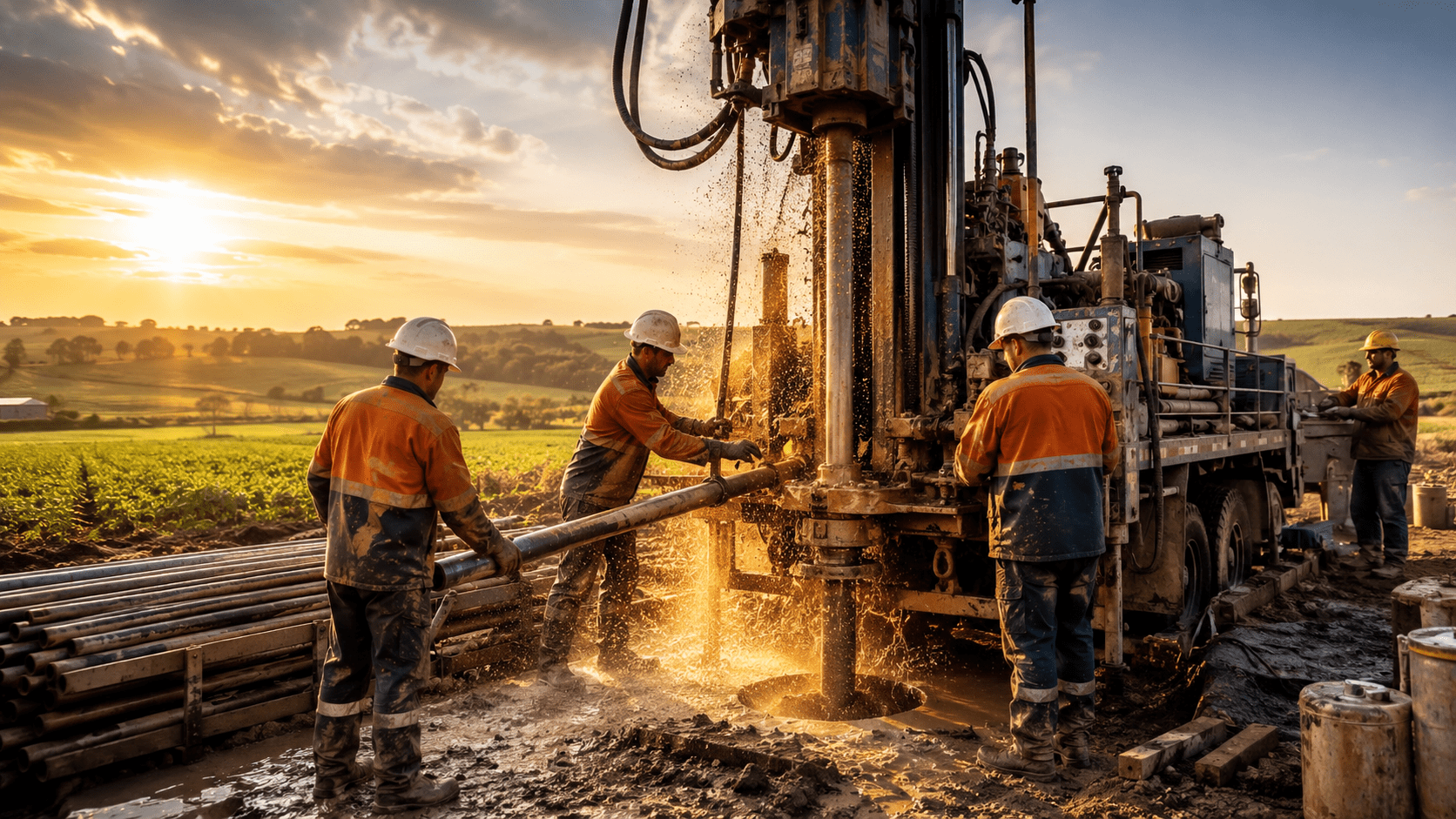
But in reality, bore drilling is a technical, physical, and experience-based job. Every successful bore depends on teamwork, correct machinery, soil understanding, safety, patience, and decision-making on the spot.
A bore drilling team faces heat, dust, noise, heavy machinery, unpredictable soil layers, water pressure issues, pipe handling, welding, mud circulation, and customer expectations — all in one working day. Their job is not only to drill; their job is to create a reliable water source that can serve farms, homes, industries, schools, factories, and commercial projects for years.
This article takes you inside a full day in the life of a bore drilling team — from early morning preparation to final site inspection.
Early Morning: The Day Starts Before Sunrise
Most bore drilling teams begin their day very early. The reason is simple: drilling work depends heavily on daylight, weather, transport, site access, and machine setup. A professional team cannot afford delays because every hour matters.
Before leaving for the site, the team checks:
- Drilling rig condition
- Diesel level and engine oil
- Hydraulic system
- Drill rods
- Bits and hammers
- Casing pipes
- Mud pump or compressor
- Welding tools
- Safety equipment
- Water availability for drilling
- Transport route
- Site location and access
- Customer requirements
This first stage is extremely important. A missing tool or damaged part can stop the whole operation later. For example, if the team reaches the site without the correct size casing pipe, the bore may be delayed for hours or even a full day.
Professional teams follow one simple rule:
Prepare before reaching the site, not after the problem appears.
Reaching the Site: First Look at the Ground
Once the team arrives, the first thing they do is inspect the site. This inspection is not just about choosing a random spot. The location of a bore affects water flow, drilling depth, cost, pipe installation, pump performance, and long-term reliability.
The team looks at:
- Nearby existing bores
- Land level
- Soil type
- Space for drilling rig
- Access for heavy machinery
- Distance from buildings
- Power source availability
- Water disposal area
- Pipe storage area
- Safety risks
- Customer’s preferred location
In agricultural land, the bore is usually planned near the water distribution system, crop area, or future solar pump setup. In residential or commercial areas, the team must be more careful because space is limited and nearby structures may be affected.
A smart drilling team does not only ask, “Where should we drill?”
They ask:
- Will the machine fit here?
- Can pipes be installed properly?
- Is this location safe?
- Will the pump be easy to install later?
- Can maintenance be done in the future?
- Is the bore location practical for water usage?
Team Roles: Everyone Has a Job
A bore drilling team works like a coordinated unit. Every person has a specific duty. If even one person becomes careless, the work slows down or becomes risky.
Common Roles in a Bore Drilling Team
| Team Member | Main Responsibility | Why It Matters |
|---|---|---|
| Drilling Operator | Controls the drilling rig | Ensures correct drilling speed, pressure, and depth |
| Helper Team | Handles rods, tools, and pipes | Keeps the drilling process moving smoothly |
| Supervisor | Manages site decisions | Communicates with customer and monitors quality |
| Mechanic/Technician | Handles machine issues | Prevents breakdown delays |
| Welder/Fabricator | Works on pipe joints and casing | Ensures strong and safe connections |
| Mud/Water Handler | Manages water or mud circulation | Helps remove soil and stabilize bore |
| Transport Support | Moves pipes, rods, and materials | Keeps material supply organized |
Good coordination is what separates a professional drilling team from an average one.
Machine Setup: The Most Important First Step
Before drilling begins, the rig must be positioned correctly. This step requires skill because drilling must be straight. A tilted rig can create a crooked bore, which may cause problems during pipe installation, motor lowering, or future pump maintenance.
The team carefully checks:
- Rig balance
- Machine alignment
- Ground stability
- Rod position
- Safety distance
- Pipe placement
- Working area clearance
Once the rig is stable, the team prepares the first drill rod and bit. The operator starts the machine slowly. At this stage, patience is very important. Starting too aggressively can damage the upper soil layer or disturb the bore alignment.
The first few feet decide the direction of the entire bore.
Drilling Begins: Dust, Noise, Pressure, and Precision
When drilling starts, the site becomes active. The machine rotates, rods go down, soil comes up, workers move around, and the operator keeps watching every vibration, sound, and pressure change.
To an outsider, it may look like the machine is doing all the work. But the truth is, the operator is constantly reading signs from the ground.
The drilling team observes:
- Speed of drilling
- Type of soil coming out
- Water signs
- Stone or hard rock layers
- Machine vibration
- Air or mud pressure
- Rod movement
- Bore stability
- Depth progress
Each layer tells a story. Soft sand, clay, gravel, rock, and mixed formations all require different handling. A good operator knows when to slow down, when to increase pressure, when to change technique, and when to stop for inspection.
Understanding Soil Layers: Experience Matters
Bore drilling is not just mechanical work. It is also about understanding underground formations. The team may face different soil layers at different depths.
Common Soil Conditions During Bore Drilling
| Soil/Formation Type | Drilling Difficulty | Common Challenge | Team Response |
|---|---|---|---|
| Soft Soil | Easy | Bore collapse risk | Use casing support |
| Clay | Medium | Sticky material blocks tools | Clean rods regularly |
| Sand | Medium to Hard | Loose formation | Proper casing and screen |
| Gravel | Hard | Tool wear and instability | Slow controlled drilling |
| Rock | Very Hard | Slow progress | Strong bit/hammer required |
| Mixed Layers | Difficult | Unpredictable drilling | Experienced monitoring |
This is where experience becomes priceless. A low-cost inexperienced team may drill quickly at first, but if they fail to manage soil layers correctly, the bore may collapse, produce sand, or give poor water flow later.
Midday Heat: The Toughest Part of the Job
By midday, the site becomes physically demanding. In Pakistan and similar climates, bore drilling teams often work under intense heat, dust, and machine noise. The work is heavy, especially when handling rods, casing pipes, and tools.
The team must stay focused despite:
- High temperature
- Dust in the air
- Heavy lifting
- Loud drilling noise
- Long working hours
- Customer pressure
- Machine heat
- Unexpected delays
This is why bore drilling is not a job for careless workers. It requires stamina, discipline, patience, and teamwork.
A good team takes short breaks, drinks water, checks machine temperature, and keeps the work area organized.
Adding Drill Rods: Going Deeper Step by Step
As the bore gets deeper, more drill rods are added one by one. Each rod increases the drilling depth. This process looks simple, but it requires timing and coordination.
The team must:
- Stop rotation safely
- Lift or hold the rod correctly
- Attach the next rod
- Tighten the connection
- Resume drilling
- Monitor alignment
- Track total depth
Depth tracking is critical. The supervisor or operator keeps a record of how deep the bore has reached and what type of material is coming out at each stage.
This information helps decide:
- Final bore depth
- Screen placement
- Casing length
- Pump depth
- Expected water yield
- Flushing requirements
The Moment Everyone Waits For: Signs of Water
One of the most exciting moments during bore drilling is when water signs begin to appear. The team may notice wet soil, water mixed with drilling material, or improved flow from the bore.
But professional teams do not celebrate too early.
Why?
Because first water does not always mean final water. Sometimes water appears in small quantity at shallow depth, but it may not be enough for long-term use. The team must continue evaluating the formation.
They check:
- Water quantity
- Water pressure
- Sand content
- Depth of water-bearing layer
- Stability of the formation
- Expected future performance
A successful bore is not just about finding water. It is about finding usable, stable, and reliable water.
Casing Installation: Protecting the Bore
After reaching the required depth, casing pipes are installed. Casing is one of the most important parts of a bore. It protects the bore from collapse and keeps unwanted soil or sand from entering.
Depending on the project, the team may use:
- PVC casing
- MS casing
- GI casing
- Slotted screen pipe
- Plain casing pipe
- Gravel packing where required
Correct casing installation directly affects water quality and pump life.
Poor casing can cause:
- Sand in water
- Bore collapse
- Reduced water flow
- Pump damage
- Motor blockage
- Short bore life
A professional team ensures that the casing is installed straight, properly joined, and placed according to the water-bearing layers.
Bore Cleaning and Development
Once drilling and casing are complete, the bore must be cleaned. This process is called bore development or flushing. It removes mud, sand, loose particles, and drilling waste from inside the bore.
The goal is to make the water flow cleaner and stronger.
Bore cleaning may involve:
- Air flushing
- Water flushing
- Compressor cleaning
- Pump testing
- Removing loose sand
- Checking discharge
- Monitoring water clarity
This step should never be ignored. A bore that is not cleaned properly may continue giving muddy or sandy water, even if the drilling was successful.
Customer Communication: Explaining the Result
A good bore drilling team does not just finish the work and leave. They explain the result to the customer.
They may discuss:
- Final drilling depth
- Water level
- Expected discharge
- Recommended pump size
- Best motor depth
- Pipe size recommendation
- Future maintenance tips
- Sand or cleaning precautions
- Solar pump compatibility
This is where professionalism becomes visible. Customers appreciate teams that explain things clearly instead of using technical language only.
For example, instead of saying:
“Formation was unstable at lower depth.”
A good supervisor explains:
“The lower layer had loose sand, so we used casing properly to protect the bore and reduce sand problems in the future.”
Clear communication builds trust.
Pros and Cons of Bore Drilling Work
Bore drilling is an essential service, but it comes with benefits and challenges for both the team and the customer.
Pros
- Provides independent water access
- Useful for farms, homes, factories, and commercial sites
- Can support solar pumping systems
- Long-term solution when done professionally
- Reduces dependency on canal or municipal water
- Improves irrigation planning
- Supports livestock and agriculture
- Can increase land usability and value
- Custom depth and design based on requirement
- Works in remote locations where water supply is limited
Cons
- Initial cost can be high
- Water is not guaranteed at every location
- Poor drilling can cause long-term problems
- Wrong pump selection can reduce performance
- Sandy water can damage motors and pumps
- Machine access may be difficult in tight areas
- Noise and dust during work
- Weather can delay operations
- Hard rock layers increase cost and time
- Maintenance may be required over time
Professional Team vs Unprofessional Team
Choosing the right drilling team is one of the most important decisions. A cheaper team may look attractive at first, but poor drilling can become expensive later.
| Feature | Professional Bore Drilling Team | Unprofessional Team |
|---|---|---|
| Site Inspection | Checks location, access, soil, and safety | Starts without proper planning |
| Equipment | Uses suitable rig, rods, bits, and casing | Uses whatever is available |
| Depth Tracking | Records depth and soil layers | Often guesses |
| Casing Work | Proper alignment and joining | Weak or careless installation |
| Safety | Maintains safe working area | Ignores basic safety |
| Customer Guidance | Explains pump and maintenance needs | Leaves customer confused |
| Problem Solving | Handles soil changes professionally | Stops or makes wrong decisions |
| Final Cleaning | Flushes and develops bore properly | May skip cleaning |
| Long-Term Result | Better water flow and bore life | Higher risk of failure |
| Value for Money | Higher trust and better outcome | Cheap at first, costly later |
Daily Challenges Faced by a Bore Drilling Team
A bore drilling team’s day is full of unexpected challenges. No two sites are exactly the same.
Common Challenges Include:
- Hard rock layers slowing down drilling
- Loose sand causing bore collapse risk
- Machine breakdowns
- Transport issues
- Wrong site access planning
- Water shortage for drilling
- Extreme heat
- Customer demanding unrealistic depth
- Low underground water availability
- Pipe or casing delays
- Power or welding issues
- Night work pressure
- Safety risks around moving machinery
The best teams are not those who never face problems. The best teams are those who know how to handle problems without compromising bore quality.
Safety on Site: No Compromise
Bore drilling involves heavy machines, rotating rods, pressure systems, welding tools, diesel engines, and deep holes. Safety is extremely important.
The team must avoid:
- Standing too close to rotating rods
- Touching moving parts
- Loose clothing near machinery
- Untrained people entering the work area
- Children near the site
- Poor lifting methods
- Unsafe welding practices
- Working under unstable equipment
Basic safety rules include:
- Keep the site clear
- Use gloves and safety shoes where possible
- Maintain distance from rotating parts
- Communicate before starting machine movement
- Keep tools organized
- Stop work if something feels unsafe
- Do not rush critical steps
A professional drilling team understands that speed is important, but safety is more important.
End of the Day: Cleaning, Checking, and Packing
After drilling, casing, and cleaning work are complete, the team begins wrapping up. This includes removing waste material, collecting tools, checking equipment, and making sure the site is safe.
The final stage may include:
- Checking bore opening
- Measuring final depth
- Cleaning extra mud or soil
- Packing rods and tools
- Inspecting machine condition
- Discussing next steps with customer
- Planning pump installation
- Giving maintenance advice
Even after a long tiring day, a professional team does not leave the site messy or unclear. The customer should know what was done, what the result is, and what should happen next.
What Makes a Bore Drilling Team Truly Professional?
A great bore drilling team is not judged only by how deep they drill. They are judged by the quality of their decisions.
A professional team has:
- Experienced machine operators
- Reliable drilling equipment
- Proper casing knowledge
- Strong problem-solving ability
- Clear customer communication
- Safety discipline
- Honest guidance
- Understanding of pumps and motors
- Ability to work in different soil conditions
- Focus on long-term bore performance
The real goal is not just to complete the bore.
The real goal is to create a water source that works smoothly for years.
Eye-Catching Key Takeaways
A Bore Is Not Just a Hole — It Is a Water System
A bore connects underground water, casing, pipe, pump, motor, electrical system, and usage demand. If one part is weak, the whole system suffers.
Cheap Drilling Can Become Expensive Later
Poor drilling may lead to sand problems, low water flow, pump damage, and repeated repair costs.
The Best Team Thinks Beyond Drilling
A professional team considers pump size, future maintenance, solar compatibility, pipe depth, and water usage.
Experience Underground Matters More Than Looks Above Ground
A shiny machine is good, but the operator’s experience is even more important.
Good Bore Drilling Requires Patience
Rushing the process can damage the bore quality. Proper drilling, casing, and cleaning take time.
Final Thoughts
A day in the life of a bore drilling team is not easy. It is a mix of physical labor, technical skill, machine handling, underground judgment, customer communication, and real-time decision-making. From early morning preparation to final site cleanup, every step matters.
The drilling team works in heat, dust, noise, pressure, and uncertainty. They do not always know what they will find underground, but with experience and proper equipment, they know how to respond.
Behind every successful bore, there is a team that planned carefully, handled machinery skillfully, understood the soil, installed casing properly, cleaned the bore, and guided the customer honestly.
So the next time you see a bore drilling machine working on a site, remember this:
They are not just drilling the ground. They are building access to water, supporting farms, homes, businesses, and communities.
A good bore drilling team does not just complete a project.
They create a reliable water future.